
Light
Use blackout curtains and cover standby lights with tape. If your child needs a night light, choose a dim warm (red or amber) one.
Sound
A steady white-noise machine or fan masks sudden household noises. Some children prefer complete quiet, so try both.
Touch
Let your child feel bedding before you buy it. Smooth cotton, soft fleece, or cooling fabric can make a big difference. Remove tags and itchy seams.
Clutter and color
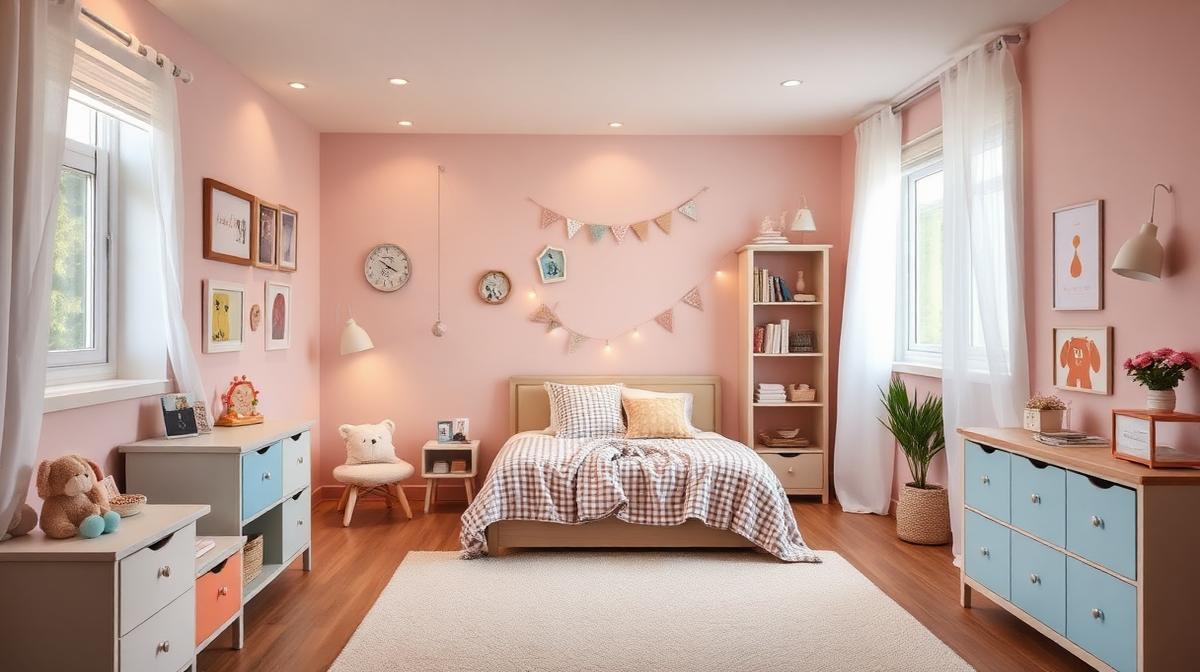
Fewer toys in sight means less to look at. Calm, muted colors around the bed tend to feel more restful than busy patterns.
A calm-down corner
A small tent, beanbag, or pillow nook gives your child a safe place to reset when they feel overwhelmed.